Watering plants is one of the most critical aspects of gardening, but it can also be one of the most difficult to understand if you are doing it correctly. Most people are aware if you do not water your plants enough, they will die. However, If you overwater your plants, they can also become overwhelmed and begin to die. Fortunately, there are ways to rescue a drowning plant. This article will outline the steps you should take if you have overwatered your plant. By following these instructions, you can save your plant from certain death!
What Over Watering Your Plants Does

If you overwater your plants, the roots may not get enough air and die off. Once this occurs, no amount of watering will bring your plant back to life. Additionally, if a part of your plant begins to rot from being overwatered, it can attract pests in the garden that may spread throughout your other plants. To prevent this, you must act quickly.
Signs Your Plant Is Drowning
Rescuing Your Plant
Take The Plant Out Of Its Pot

If your plant has been flooded by water, you should first take it out of its pot. When removing the plant from its pot, be extremely careful not to break any roots or stems that may be sensitive. If you have a huge plant, this process would also be best with another person. Once the plant is out of its pot, it is time to move to step two.
Check For Root Damage

To check your plant’s roots for damage, gently run your fingers through the soil and roots. If you do not feel any resistance, continue to check for any damage. The next step is to determine if your plant’s roots have become water-logged. Grab a handful of soil from around to plants’ roots and squeeze it together. If you can’t squeeze water out of it, the plant is in good condition, and you should continue to step three.
However, if your plant’s roots are damaged, it is time to do even more work. You will need to carefully remove any dead or damaged roots that may be rotting. Once you have done this, your plant should look like it did when you first bought it. If there are brown marks on the leftover roots, this is okay and does not affect the plant.
Clean The Plant Off
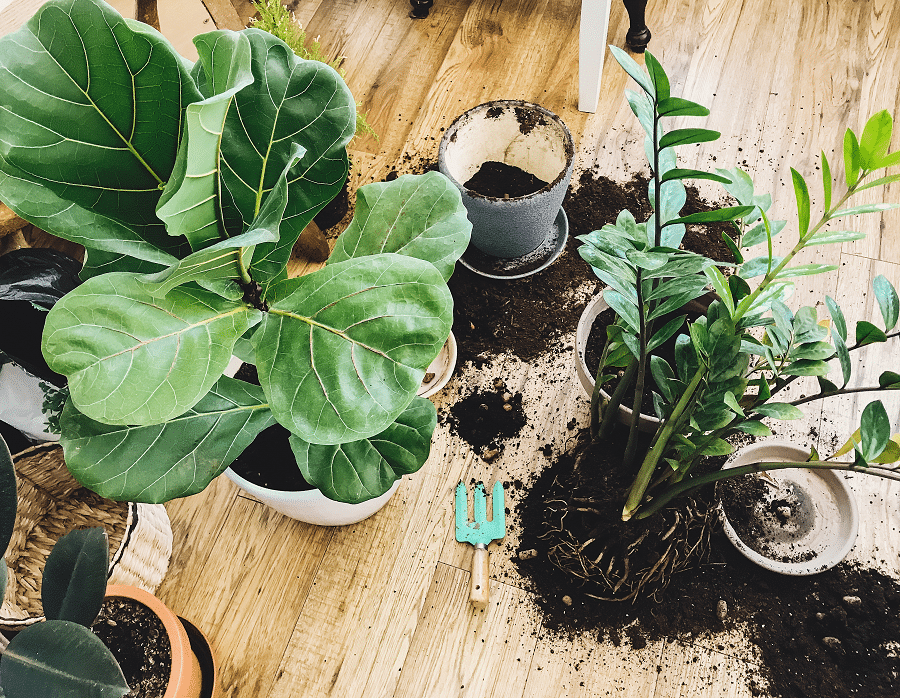
Now that you have removed all of the roots have, you can start to clean your plant off. Wash any dirt away from the stem and leaves, so it is completely free of debris. If there are some brown marks on plant matter or if some parts look a little shriveled, this is fine. Once you have completed this step, your plant should look clean and ready for new soil!